The 5 Most Powerful Nukes Ever Detonated (Capable of Erasing Cities)
When we talk about the most powerful nukes ever detonated in history, we’re not just dealing with weapons—we’re talking about devices capable of obliterating entire cities in seconds. These were not theoretical doomsday machines, but real detonations that shook the planet, altered geopolitics, and left behind terrifying legacies.
From the infamous Tsar Bomba to America’s Castle Bravo, the race to build bigger and deadlier nuclear weapons reached its peak during the Cold War. In this article, we’ll explore the largest nukes ever detonated, ranked by their destructive power, explosive yield, and historical impact.
Whether you’re a history buff, a military enthusiast, or just morbidly curious about humanity’s most extreme weapons, this list of the deadliest nuclear bombs ever tested will blow your mind—literally and figuratively.
1. Tsar Bomba – One of Most Poweful Nukes ever detonated and Made
The Soviet Monster That Shook the Sky
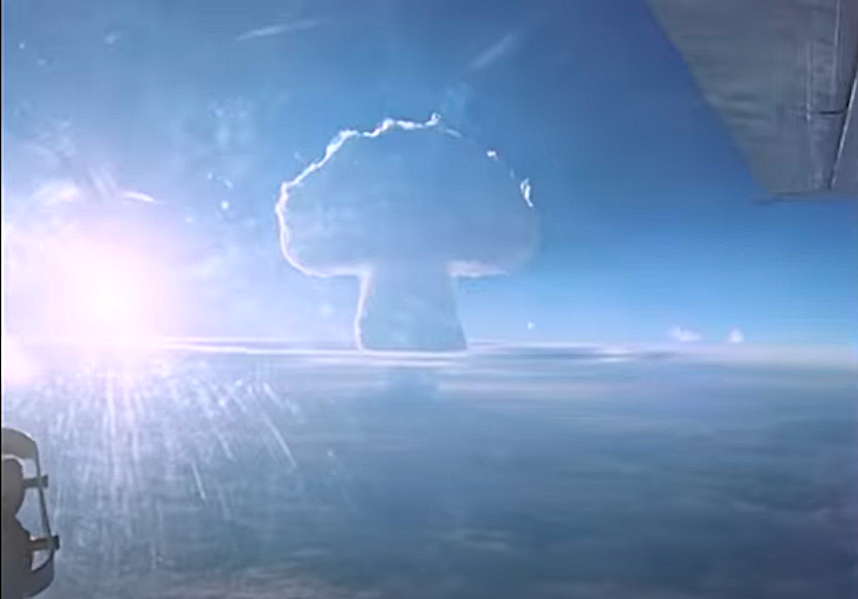
On October 30, 1961, the Soviet Union detonated a nuclear device so powerful it remains unmatched to this day: the Tsar Bomba. With an estimated yield of 50 megatons, it was more than 3,000 times more powerful than the bomb dropped on Hiroshima. Its shockwave circled the Earth three times, and its flash was visible from over 600 miles away.
The bomb was so massive that it couldn’t be dropped in a standard way. A specially modified Tu-95 bomber carried it high above Novaya Zemlya, a remote Arctic test site. Even though the bomb was dropped with a parachute to give the plane time to escape, the crew was only given a 50% survival chance.
Why Was It Built (And Never Used Again)?
Tsar Bomba was built not for war, but for political intimidation during the Cold War. It was a demonstration of power—a loud and terrifying message to the United States and NATO. Originally designed to yield 100 megatons, Soviet scientists cut it in half to reduce fallout and avoid triggering an international incident.
Despite its record-breaking size, the Tsar Bomba was never deployed as a practical weapon. Its size, weight, and uncontrollable devastation made it strategically useless. But as a symbol of human destructive capacity, it remains unmatched.
2. Castle Bravo – America’s Most Devastating Nuclear Test
On March 1, 1954, the United States conducted Castle Bravo, a nuclear test that would become one of the most infamous in history. Detonated on Bikini Atoll in the Marshall Islands, this hydrogen bomb produced an explosive yield of 15 megatons—far higher than expected.
The scientists underestimated the bomb’s reaction with lithium-7, a component in the fusion fuel, which tripled the yield. What was meant to be a controlled test turned into a nuclear disaster, spreading radioactive fallout over more than 7,000 square miles.
The Fallout That Shook the Pacific
The explosion created a mushroom cloud over 25 miles high and contaminated nearby islands, forcing evacuations and causing long-term health effects. Japanese fishermen aboard the Lucky Dragon 5 were also exposed, causing an international incident and public outcry.
Castle Bravo wasn’t just a test—it was a turning point. It revealed the unpredictable nature of hydrogen bombs and pushed the U.S. to reconsider future testing methods.
3. Ivy Mike – The First Hydrogen Bomb Ever Detonated
A Scientific Breakthrough with Unimaginable Power
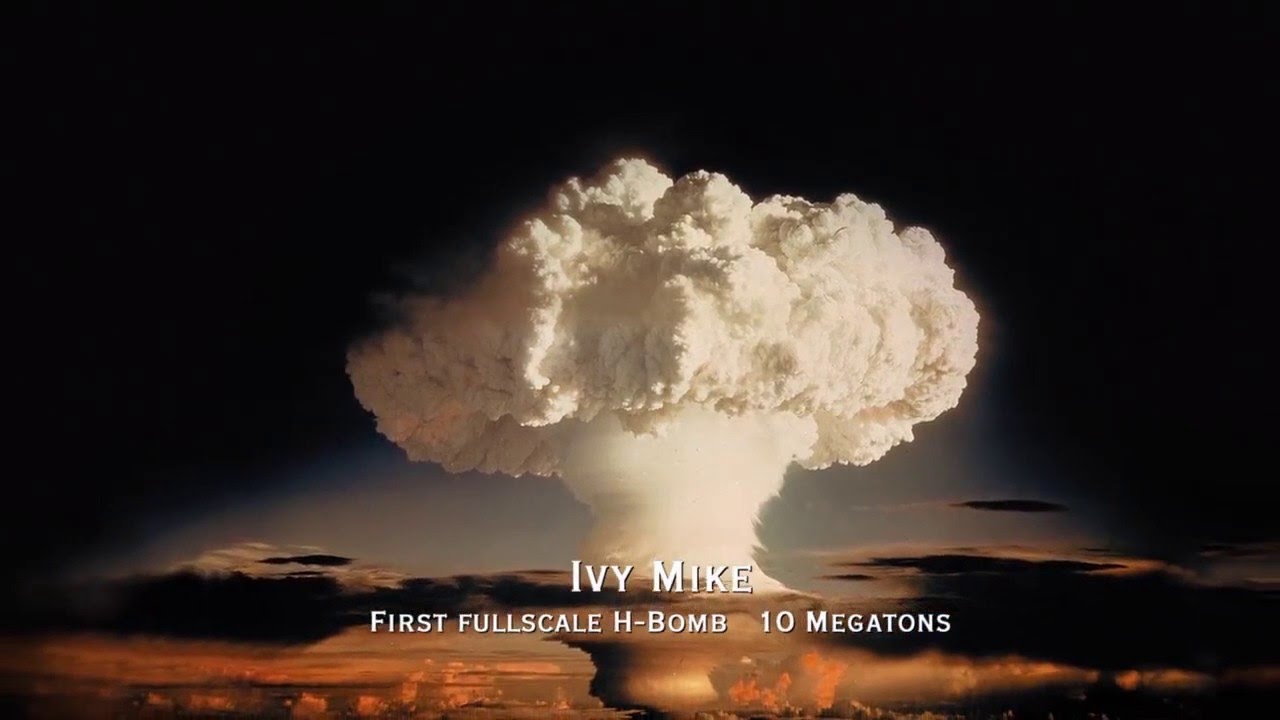
On November 1, 1952, the United States entered a new era of warfare by detonating Ivy Mike—the world’s first true hydrogen bomb. Tested on Elugelab Island in the Marshall Islands, the bomb had a yield of 10.4 megatons, completely vaporizing the island it was placed on.
Unlike atomic bombs that rely solely on nuclear fission, Ivy Mike used nuclear fusion, the same process that powers the sun. This made it exponentially more powerful, ushering in the terrifying possibility of planet-scale destruction.
A Bomb Too Big for the Battlefield
While Ivy Mike marked a major leap in nuclear science, it was never intended to be a deliverable weapon. The device was enormous—over 80 tons—and required an entire building just to house it. It was a proof-of-concept, designed to test whether fusion-based bombs were viable.
Despite its impractical size, Ivy Mike’s success paved the way for smaller, more deployable hydrogen bombs like Castle Bravo. In short, it changed the game forever and it would been acknowledge as one of the most powerful nukes ever detonated.
4. B41 – The Most Powerful U.S. Nuke Ever Designed
America’s Forgotten Megaton Giant
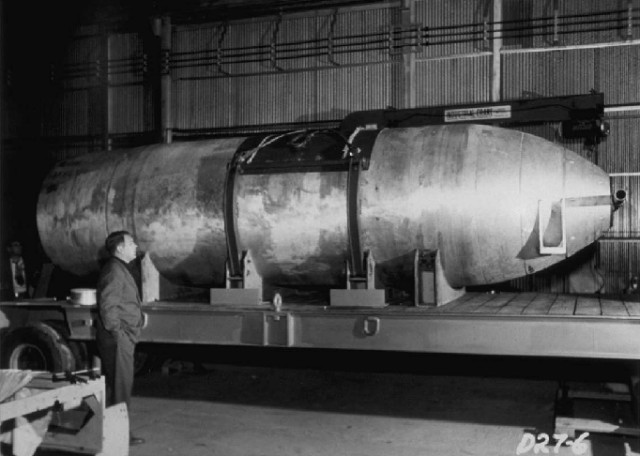
While most people recognize Castle Bravo or Ivy Mike, few have heard of the B41, the most powerful nuclear bomb ever built by the United States. With a theoretical yield of 25 megatons, this thermonuclear weapon was a three-stage design, optimized for maximum destruction.
Developed in the early 1960s during the height of the Cold War, the B41 was intended to counterbalance Soviet advancements. Its destructive power could have flattened entire metropolitan areas, making it the deadliest bomb in U.S. history—on paper.
Deployed but Never Fully Tested
Although around 500 units of the B41 were manufactured and deployed by the U.S. Air Force, none were ever tested at full strength. Most remained in storage until they were retired in the 1970s.
Due to rising concerns about fallout, overkill capacity, and the shift toward more “strategic” nuclear deterrents, the B41’s raw power was ultimately deemed unnecessary. Still, its existence represents a chilling reminder of just how far the nuclear arms race went.
5. Operation Grapple Y – Britain’s Biggest Nuclear Blast
The UK’s Entry into the Hydrogen Bomb Club
On April 28, 1958, the United Kingdom carried out its most powerful nuclear test to date: Operation Grapple Y. Conducted over Christmas Island in the Pacific Ocean, this thermonuclear device had a yield of 3 megatons—over 200 times stronger than the bomb dropped on Nagasaki.
This test marked the UK’s full entry into the hydrogen bomb era, proving it could compete with the nuclear capabilities of the U.S. and the Soviet Union. It was also a political statement, cementing Britain’s place at the top table of Cold War nuclear powers.
International Fallout (Not Just Radiation)
Although less powerful than the Soviet and American tests, Grapple Y had major geopolitical implications. It led to increased global scrutiny, especially from nations in the Pacific affected by radiation exposure. The test was conducted in the open atmosphere, releasing dangerous radioactive materials across vast areas.
The political backlash from these tests eventually pressured the UK to sign the Partial Test Ban Treaty in 1963, alongside the U.S. and USSR, agreeing to limit nuclear tests to underground detonations.
Conclusion: Humanity’s Most Powerful Explosions – A Sobering Reminder
From the colossal fireball of Tsar Bomba to the catastrophic miscalculation of Castle Bravo, the history of the most powerful nuclear weapons ever detonated is both fascinating and terrifying. These explosions weren’t just tests—they were global statements of power, capability, and political pressure.
Each detonation tells a story: a race for dominance, a leap in scientific ambition, or a misjudged experiment that spread radioactive dust across oceans. Whether it was the first hydrogen bomb ever created or a three-stage warhead never fully unleashed, these weapons highlight how close humanity has come to its own undoing.
Understanding these events isn’t just about numbers and megatons. It’s about remembering how far we’ve pushed the limits of destruction—and why those lessons still matter today.
Want more history with impact? Check out our articles on Proxy Wars or the Lesser Known Greek Gods to explore how power has shaped humanity across eras.




/socrates-greece-athens-546975617-589b585e3df78c47586efb7d.jpg)